Louise Covillas
August - September 2026
Louise Covillas was in Bangkok for the 2026 edition of the "La Route des Résidences" exchange program with the support of the Institut français, the Institut français in Cambodia and the Embassy of France to Thailand together with the King Mongkut’s Institute of Technology Ladkrabang (KMITL) and Creative Migration & Bangkok 1899.
Louise Covillas (1996) lives and works in Paris. A graduate of the École nationale supérieure des Beaux-Arts de Paris, she develops a sculptural practice rooted in collecting, close observation of living environments and an attention to the subtle forms of coexistence between human and non-human beings. Her work has been presented in numerous group exhibitions in France and internationally, including the Prix Dior de la Colle Noire (2023, Chapelle des Beaux-Arts de Paris), Galerie Strouk (2024, Paris) and a group exhibition at POUSH (Aubervilliers). She also participated in a residency in Shanghai directed by Paul Devautour, an experience that deepened her interest in site-responsive practices and in the relationships between places, uses and situated narratives. Alongside her artistic practice, she leads workshops at Le Sample (Bagnolet), exploring collecting and simple making processes.
In between August to September 2026, Bangkok 1899 and the School of Architecture, Art, and Design (AAD) at King Mongkut's Institute of Technology Ladkrabang (KMITL) is hosting Louise during her Thailand residency. While in Cambodia, she will be staying at Villa Marguerite Duras in partnership with the SM Art Center.
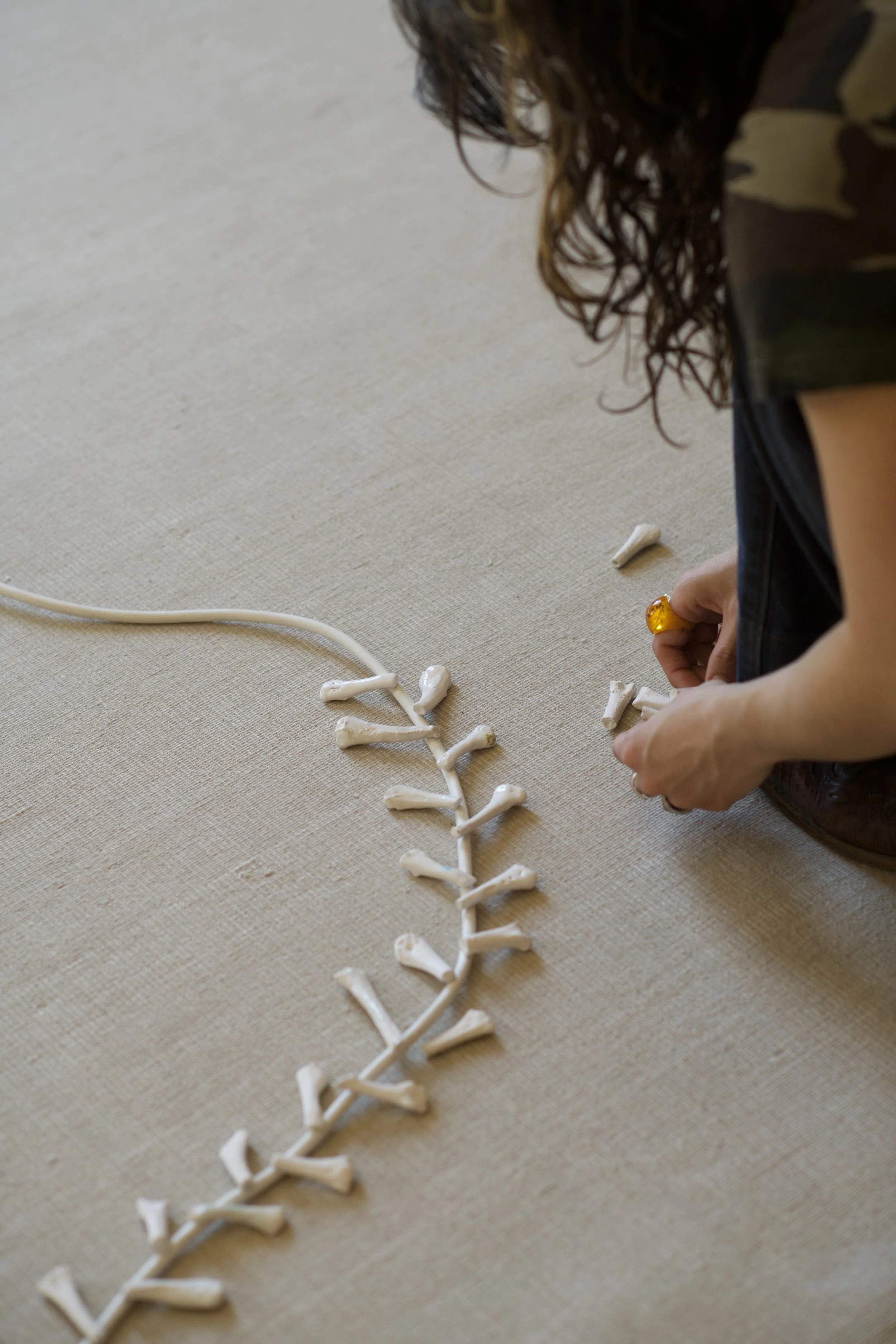
Photo credit: © Christel Exelmans
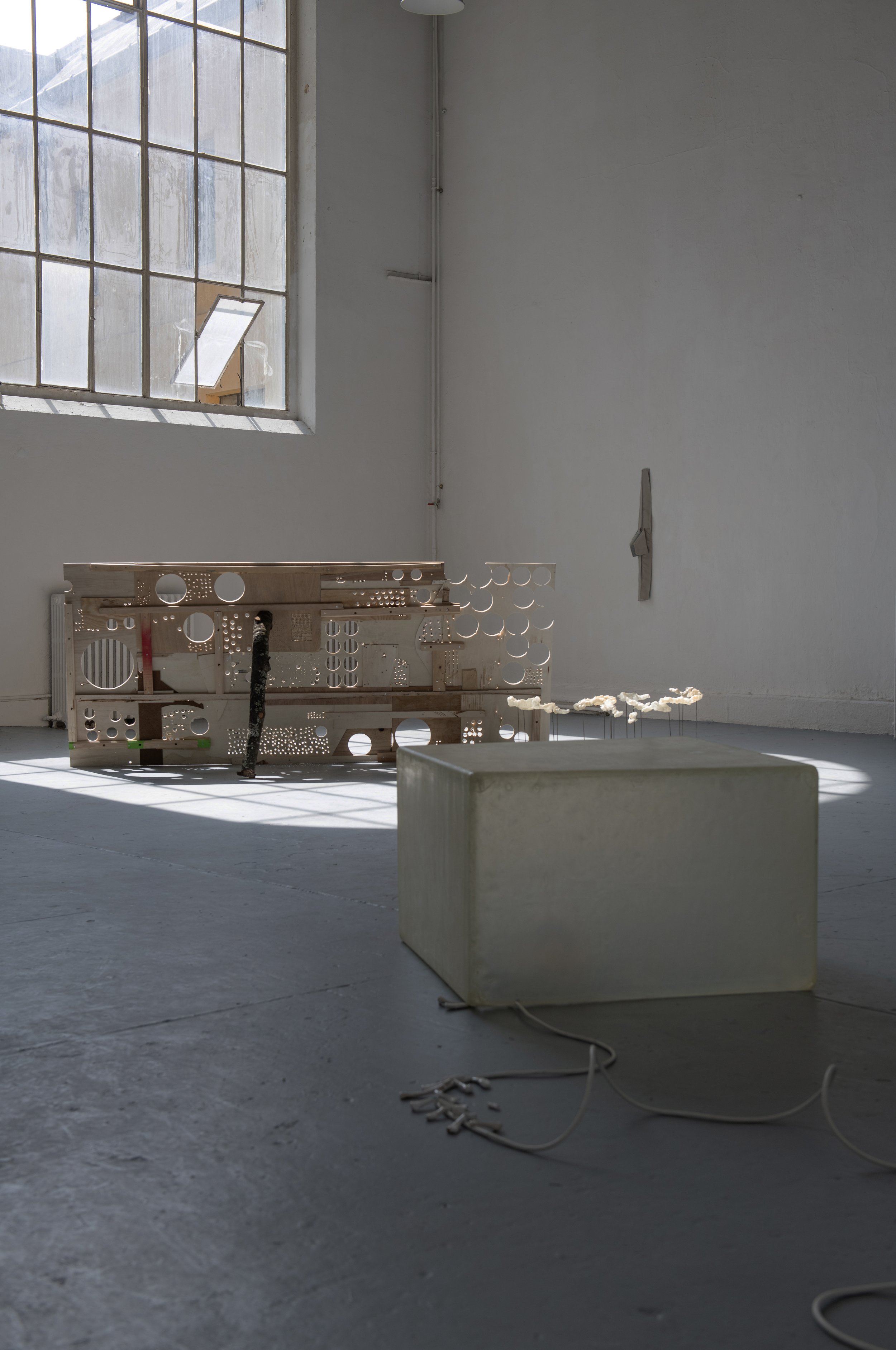
My dog wears a path on the same line
September 25 - 27, 2026
The work presented in My dog wears a path on the same line developed over the course of a month spent between Bangkok and Bang Saen, through movement, collecting and an attention to the discreet traces of living things that inhabit the places I encountered.
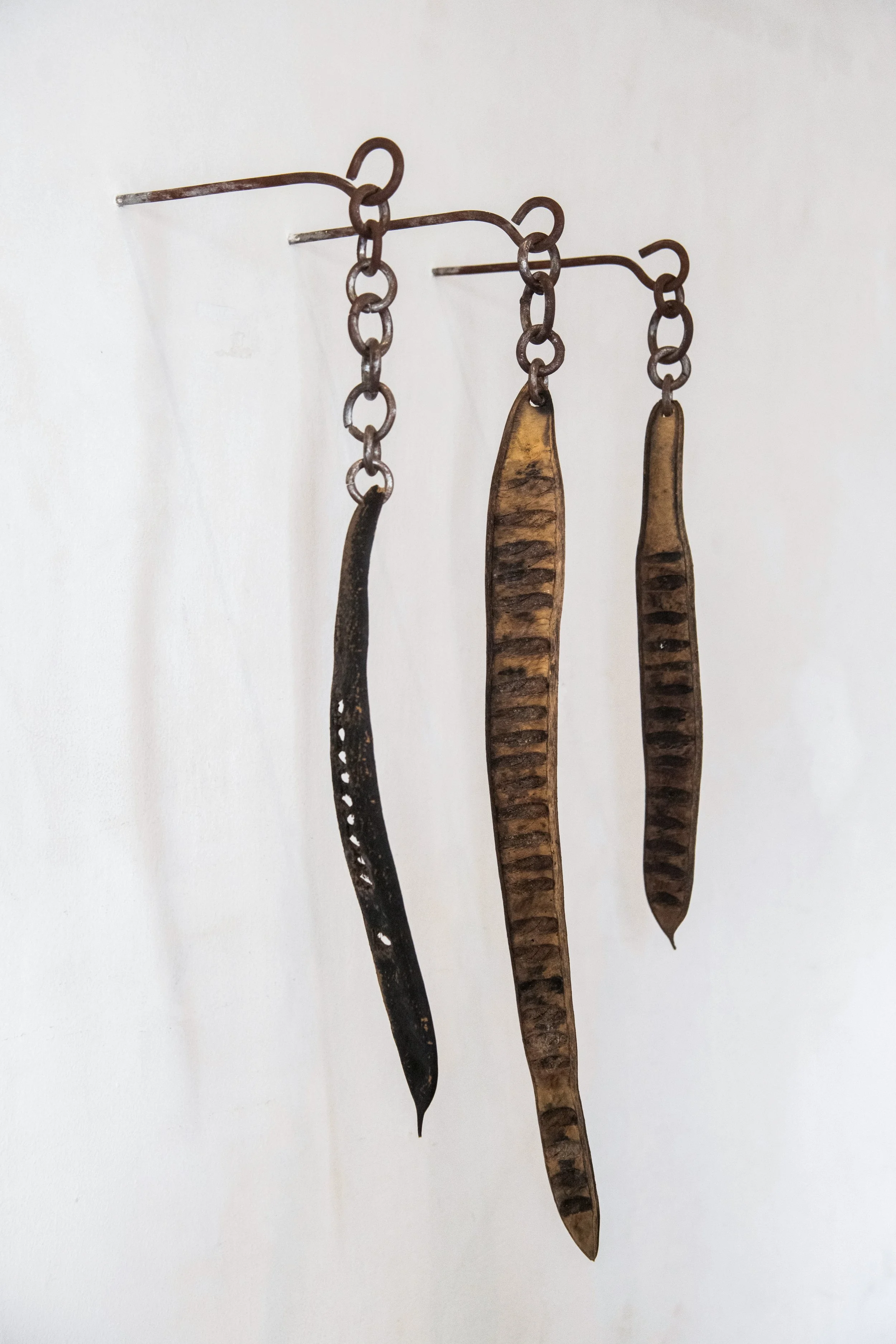
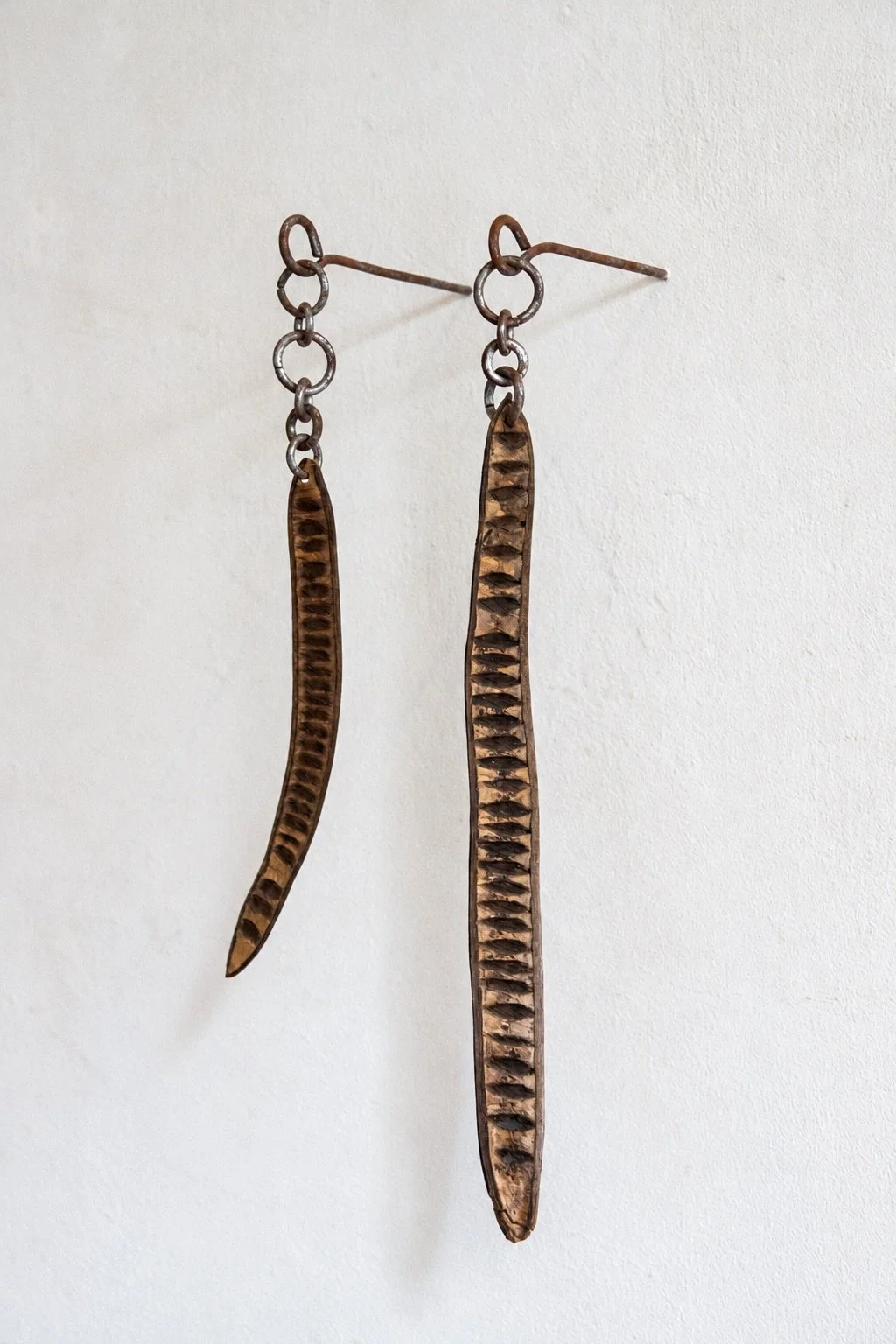
The first body of work takes as its starting point flamboyant seeds collected in Bangkok. Presented as they were found, they are suspended from steel chains, each link shaped and assembled by hand. The fragility and simplicity of the collected elements are met by the slow and meticulous process of working with metal. The time devoted to making these display structures extends the gesture of attention that first allowed me to notice the seeds: stopping, looking, gathering, and then caring for what has been collected. The act of making becomes, in itself, a way of giving time and importance to ordinary forms that might otherwise go unnoticed.
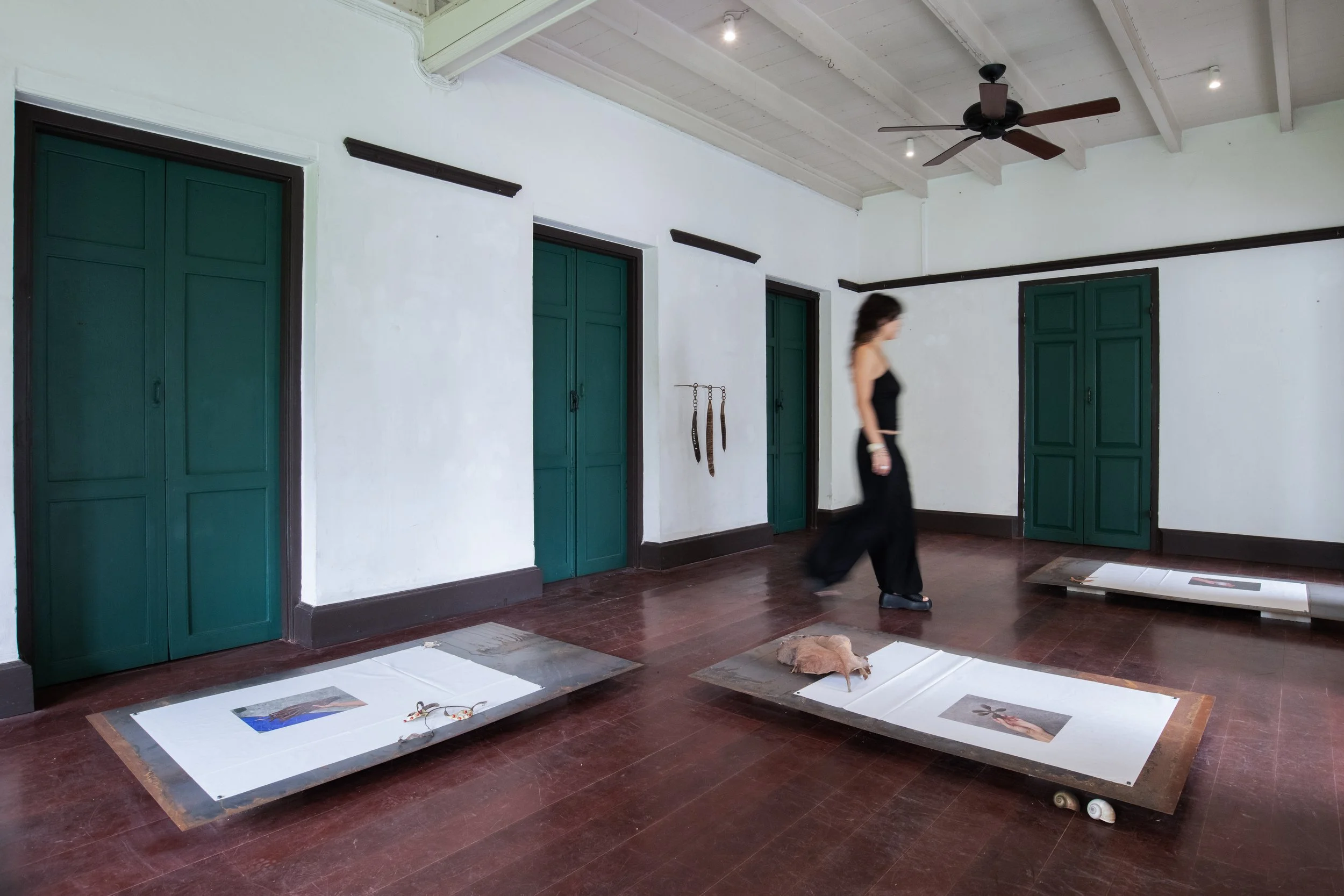
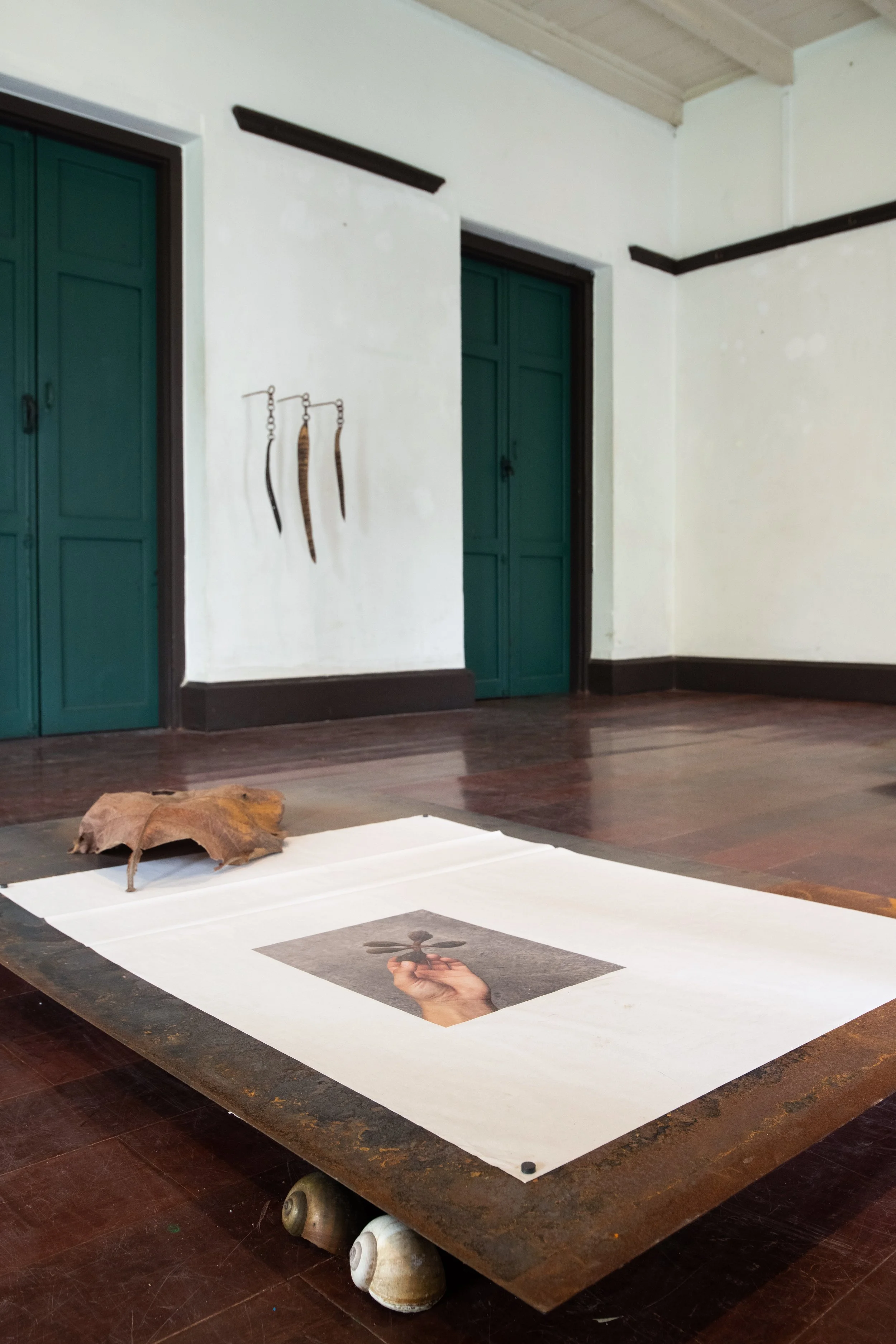
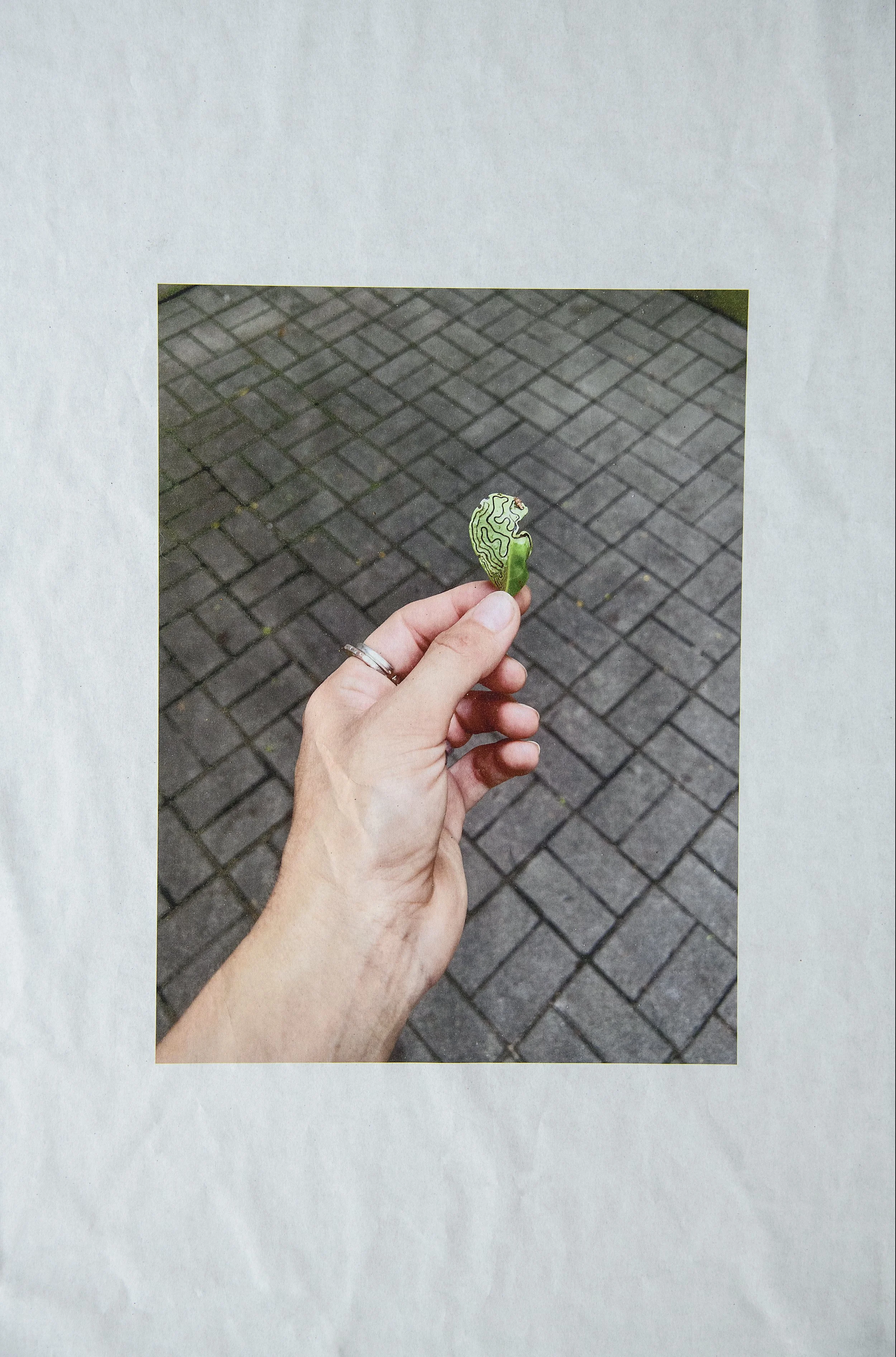
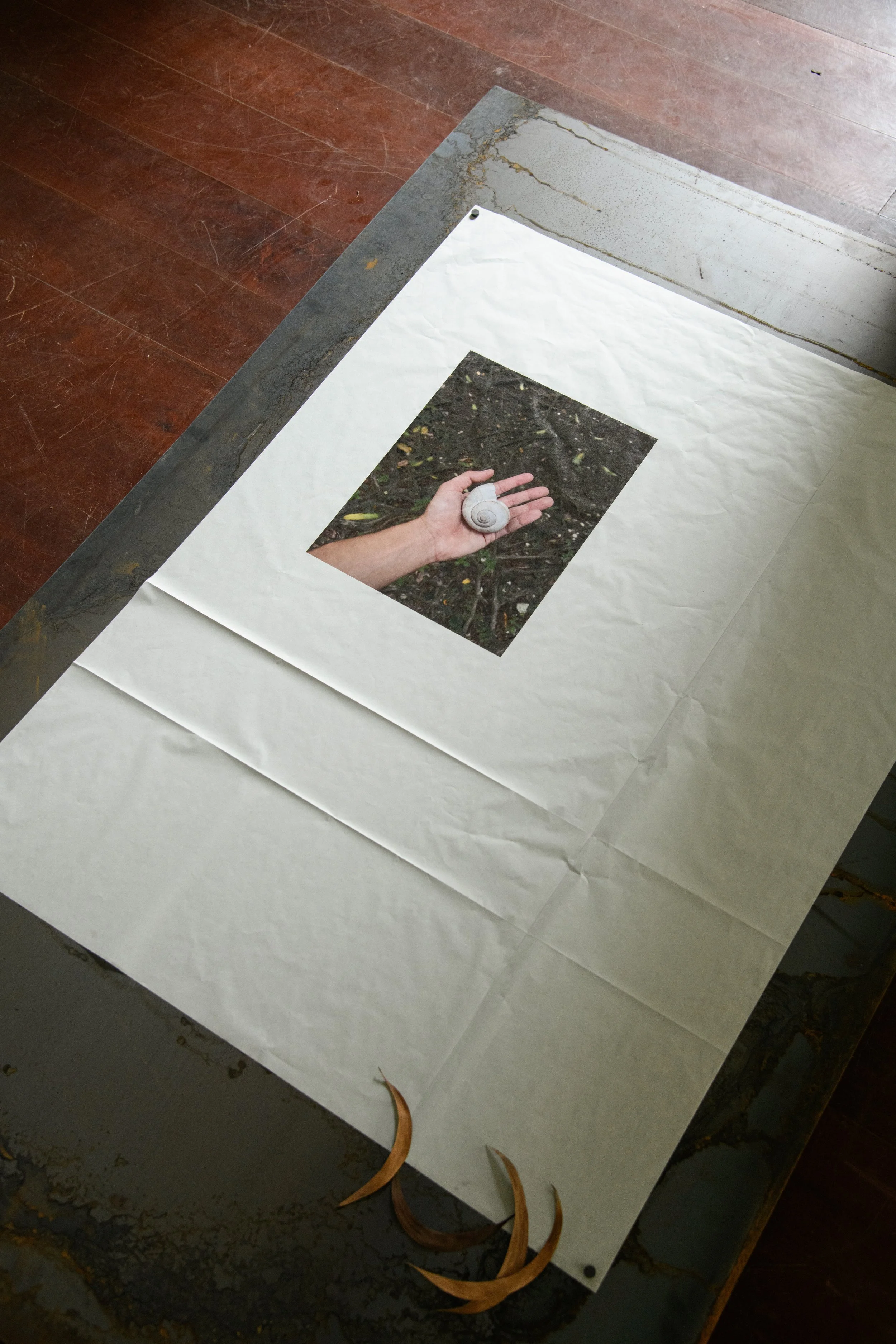
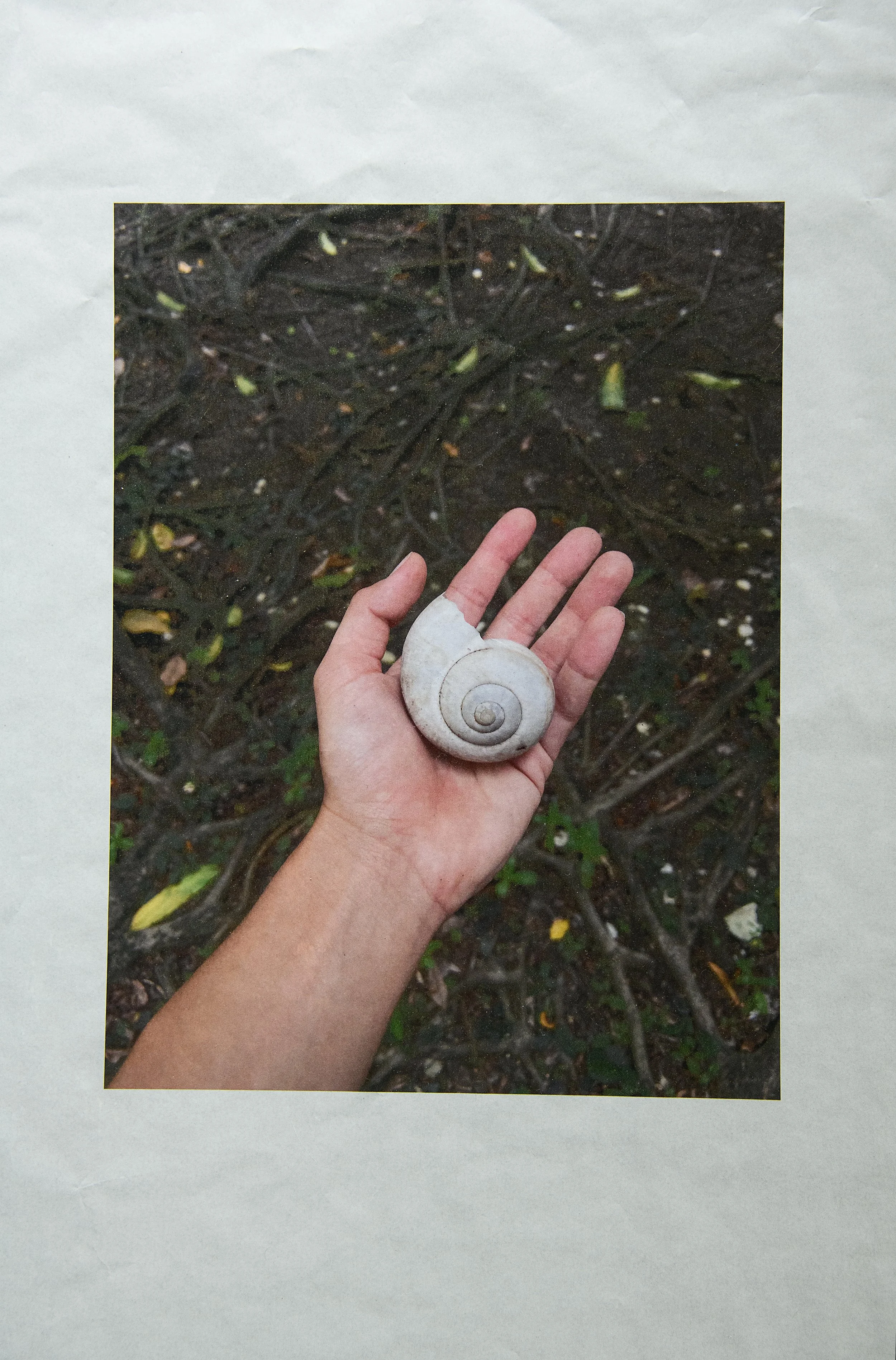
A second body of work brings together images printed on paper and traces of living things gradually collected throughout the residency. The printed sheets are folded, giving the images form and volume. They are presented on metal sheets placed on bricks, temporarily borrowed from the different places and institutions that hosted or accommodated me during my stay. Already used, rusted, and marked by time, the metal sheets carry traces of their own histories and previous functions. Rather than acting as neutral supports, they add another layer to the accumulation of traces that forms the work. After the exhibition, these materials will return to their original uses. The installation is therefore constructed from what is already present and available on site, extending the principle of collecting into the very structures used to display the work. Its form is directly shaped by the places I have moved through and by the resources they temporarily make available, reinforcing the in situ nature of the work.
Through their folds, the images engage with the idea of the paper map: an object that is folded, unfolded, handled, and carried through a territory. Rather than offering an objective representation of a place, they suggest a sensitive mapping shaped by movement and by the elements that caught my attention. Together with the collected fragments, they form an evolving archive, situated somewhere between observation, inventory and archaeology. Territory is thus drawn less through geographical landmarks than through a constellation of details that have been noticed, gathered and preserved.
This approach resonates with Ursula K. Le Guin’s The Carrier Bag Theory of Fiction, which proposes shifting the narrative away from the heroic gesture of conquest and towards the more discreet gesture of the container: gathering, carrying, and preserving what one encounters. The carrier bag becomes another way of constructing a narrative, no longer centered on a single event, but formed through a multiplicity of fragments brought into relation with one another.
Collecting, then, is not simply an act of preservation. The gesture of taking something with us implies a particular way of looking and, in turn, transforms our perception of what surrounds us. Collecting becomes both a working method and a way of inhabiting and reading a territory. It invites us to move away from an understanding of landscape as a backdrop or scenery and instead to consider it as an active environment made up of multiple presences, traces and transformations.
These details - seeds, fish, snail shells - become points of entry into an attentive reading of Bangkok’s urban landscape. Through them, another mapping of the city begins to emerge: fragmentary and situated, shaped less by established landmarks than by what has been noticed, encountered and gathered while moving through it.
Louise would like to warmly thank Akras Pornkajornkijkul and his students, Astrid Renoux, Korakot “Anji” Bartley, Lidia Vajda, Marisa Phandharakrajadej and her students, Milana Gabriel, Piyanan Kengrungrueangchai, and the KMITL Wood Department for their invaluable help.